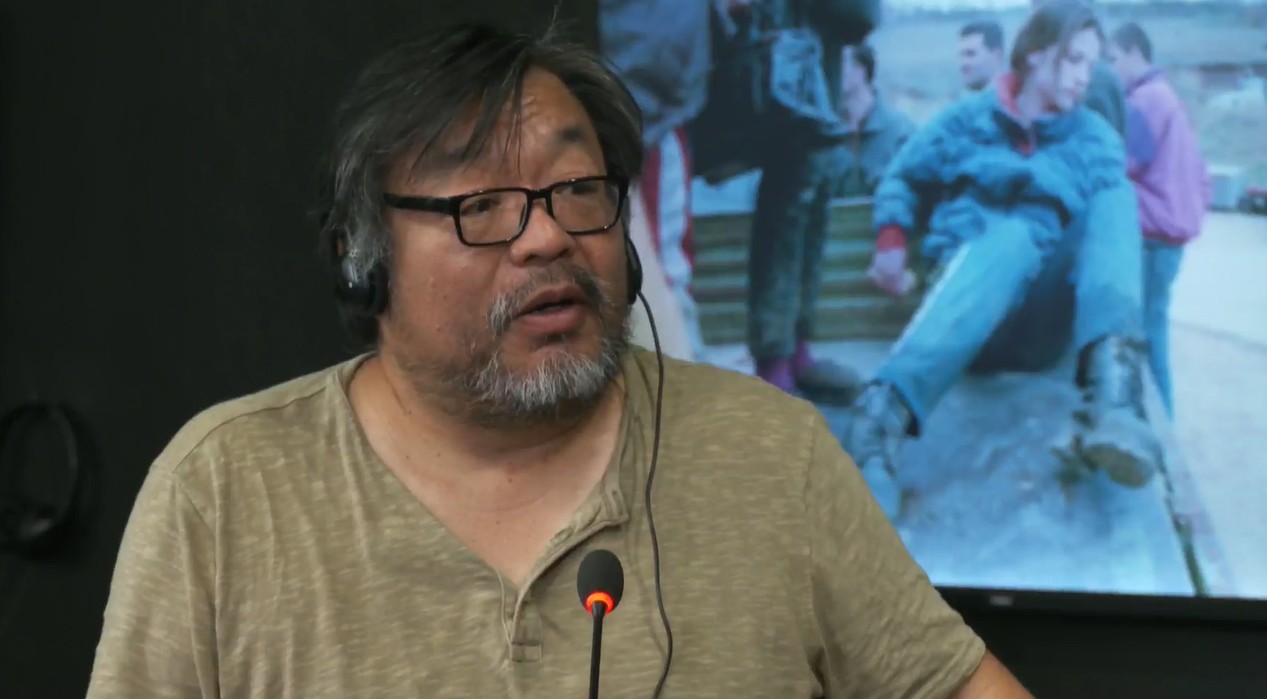
During a lecture at BIRN’s Reporting House in Pristina, New York-based photojournalist Alan Chin reflected on his work during the 1998–99 Kosovo war, emphasizing the role of powerful imagery in shaping Western perceptions and accelerating international intervention. “Kosovo was one of those places where the work we did had an impact,” he said, pointing to widely circulated photos—such as that of fallen KLA fighter Ali Pacarizi—as catalysts for global attention. Chin argued that the speed of the West’s response in Kosovo was partly driven by guilt over the failure to act in Bosnia, particularly after the 1995 Srebrenica genocide.
Chin, who also covered conflicts in Iraq and Afghanistan, first arrived in Kosovo in 1997 and returned several times, documenting funerals, refugee flows, and border chaos. He recounted photographing civilians and moments of deep trauma, including Serbian war criminal Željko ‘Arkan’ Ražnatović at a 1999 football match, where Arkan confronted journalists for not being “sports photographers.” For Chin, it was always the suffering of civilians that mattered most: “We followed who was being killed, and what was happening to the people.”
His participation at Reporting House—an exhibition blending wartime journalism, photography, and contemporary art—underscores the enduring impact of visual media in both documenting and shaping the legacy of conflict.